

Facilities We Serve
Cleaning Programs Built for the Medical Office
Medical offices do not operate like ordinary workplaces. Patient-facing rooms, staff areas, approved clinical spaces, restrooms, and shared building areas may each require different tasks, products, frequencies, and access instructions.
Appointment-Based Practices
Primary care, specialty, dental, orthodontic, behavioral-health, physical-therapy, and rehabilitation offices can receive recurring service planned around appointment hours and staff procedures.
Outpatient and Diagnostic Facilities
Higher-traffic outpatient, urgent-care, diagnostic, and imaging offices can be divided into practical service areas with separate cleaning priorities and documented access requirements.
Medical Buildings and Groups
Multi-tenant properties and multi-location healthcare groups can maintain a separate scope for each facility while using one point of contact for communication and approved service changes.
Written Cleaning Scope
A Cleaning Program Based on Your Facility
Facility size, patient traffic, flooring, operating hours, internal procedures, and the division of responsibilities between clinical staff and the cleaning team all affect the service plan.
During the walkthrough, System4 can document the rooms included in each visit, approved surfaces and products, cleaning and disinfection frequencies, restricted spaces, ordinary-waste procedures, access instructions, supply needs, inspections, and communication expectations.
A written scope reduces assumptions. It should clearly identify both what the cleaning team will do and what remains the responsibility of facility or clinical personnel.
Possible Service Areas
What Can Medical Office Cleaning Include?
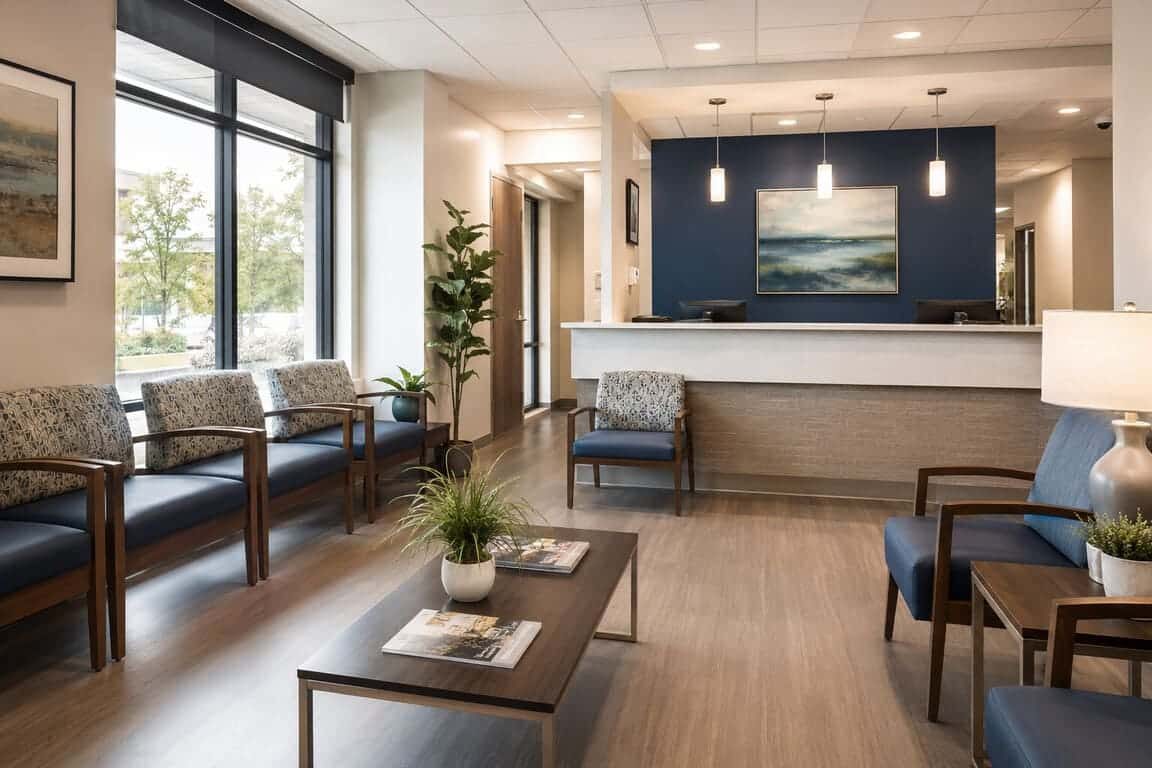
Reception and Waiting Areas
- Approved counters, seating, and shared surfaces
- Entrance glass and identified touchpoints
- Carpet and hard-surface flooring
- Ordinary waste and liners
Approved Exam-Room Surfaces
- Assigned counters, sinks, and cabinet exteriors
- Handles, switches, and approved touchpoints
- Floors and ordinary waste when included
- Disinfection using the documented product and contact time
Staff Areas and Restrooms
- Offices, hallways, and breakrooms
- Restroom fixtures and dispensers
- Vacuuming and mopping
- Requested soap, paper, and liner replenishment
Documented Procedures
Cleaning, Disinfection, and Cross-Contamination Controls
Cleaning removes visible soil and debris. When disinfection is included, System4 can use EPA-registered disinfectants on approved surfaces while following the product label, including the required contact time.
- Identify approved products and compatible surfaces
- Document frequently touched surfaces requiring attention
- Use color-coded microfiber materials by area when appropriate
- Keep restroom equipment separate from equipment used elsewhere
- Record restricted rooms and excluded materials
- Establish a reporting procedure for unexpected conditions
Clear Responsibilities
Clinical and Janitorial Scope Boundaries
System4 can clean general spaces and approved nonclinical surfaces included in the service agreement. The facility determines which exam-room surfaces are assigned to janitorial personnel and which remain the responsibility of clinical employees.
System4 cleaning teams do not handle:
- Sharps or sharps containers
- Regulated medical waste
- Blood or bodily-fluid remediation
- Clinical instruments
- Patient-care equipment sterilization
- Unidentified clinical materials
If a cleaner encounters an excluded material or incident, it should remain undisturbed and be reported according to the facility's established procedure.
Planning Resource
Medical Office Cleaning Walkthrough Checklist
Use the printable checklist to document service areas, cleaning frequencies, clinical and janitorial responsibilities, exclusions, access instructions, supply needs, and quality-control expectations.
- Compare providers using the same facility information
- Prepare managers and staff for the walkthrough
- Review whether an existing cleaning program still fits
Schedule Planning
How Often Should a Medical Office Be Cleaned?
The following frequencies are useful planning starting points for many medical offices. The final schedule should still reflect operating days, patient volume, restroom use, flooring, waste volume, staff daytime tasks, and the areas assigned to the janitorial team.
| Medical office area | Typical cleaning frequency |
|---|---|
| Reception and waiting areas | Daily or 3–5 times per week; identified touchpoints may need attention during operating hours |
| Entrances and interior glass | Spot cleaned daily; more complete glass cleaning weekly or as needed |
| Approved exam-room surfaces | Daily when included in the janitorial scope; designated surfaces may also be addressed by clinical staff between patients |
| Administrative offices | 2–5 times per week, depending on occupancy and use |
| Staff breakrooms | Daily or 3–5 times per week |
| Restrooms | Daily at minimum; multiple checks per day may be appropriate in busy facilities |
| Hallways and shared spaces | Daily or 3–5 times per week, depending on traffic |
| Carpeted areas | Vacuumed 2–5 times per week; periodic deep cleaning every 6–12 months or as conditions require |
| Hard-surface floors | Mopped daily or 3–5 times per week; restorative care scheduled according to traffic, flooring, and visible wear |
These are typical frequencies, not fixed medical or regulatory requirements. The walkthrough and written scope should establish what is appropriate for the individual facility.
Accountability
Checklists, Inspections, and Dedicated Account Management
System4 uses written scopes, service checklists, quality inspections, and a dedicated account manager to help verify assigned work and communicate approved changes to the cleaning team.
- Documented expectations for each facility
- Routine service verification
- A defined concern-reporting process
- One point of contact when priorities change
- Separate scopes for multi-location organizations
- Periodic review as facility use evolves
Related Facility Services
Additional Services for East Bay Medical Facilities
Local Medical Cleaning Pages
Location-Specific Medical Office Cleaning
Common Questions
Medical Office Cleaning FAQs
Can System4 clean exam rooms?
Yes. System4 can clean approved nonclinical surfaces in exam rooms when the rooms, surfaces, products, and procedures are included in the written cleaning plan. The facility determines what remains the responsibility of clinical personnel.
Do you use EPA-registered disinfectants?
When disinfection is included, System4 can use EPA-registered products on approved surfaces while following the product label and required contact time.
Does System4 handle sharps or regulated medical waste?
No. Cleaning teams do not handle sharps, sharps containers, regulated medical waste, or blood and bodily-fluid remediation. Excluded materials are left undisturbed and reported according to the facility's procedure.
Can you replenish paper products and restroom supplies?
Yes. Soap, paper towels, toilet paper, trash liners, and other agreed consumables can be monitored and replenished when included in the service agreement.
Can cleaning take place after patients leave?
Yes. Service can be arranged around appointment and operating hours. Access, alarm, security, and restricted-area instructions are documented before cleaning begins.
Request a Facility Walkthrough
Build a Medical Office Cleaning Plan for Your East Bay Facility
A walkthrough allows System4 to review your facility, clarify responsibilities, document access and cleaning requirements, and recommend an appropriate recurring schedule.